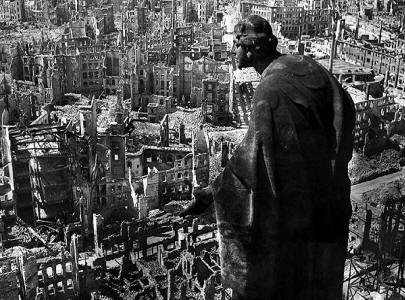
During the Second World War, Germany suffered enormous losses, both in human lives and in territory.
During and after the war, far more German civilians died than soldiers in combat. The total number of German war victims is given here as 15.8 million. Soldiers killed or missing in action accounted for 4.3 million (27%), while 11.5 million civilians (73%) died during flight, bombing, captivity and the post-war upheavals.
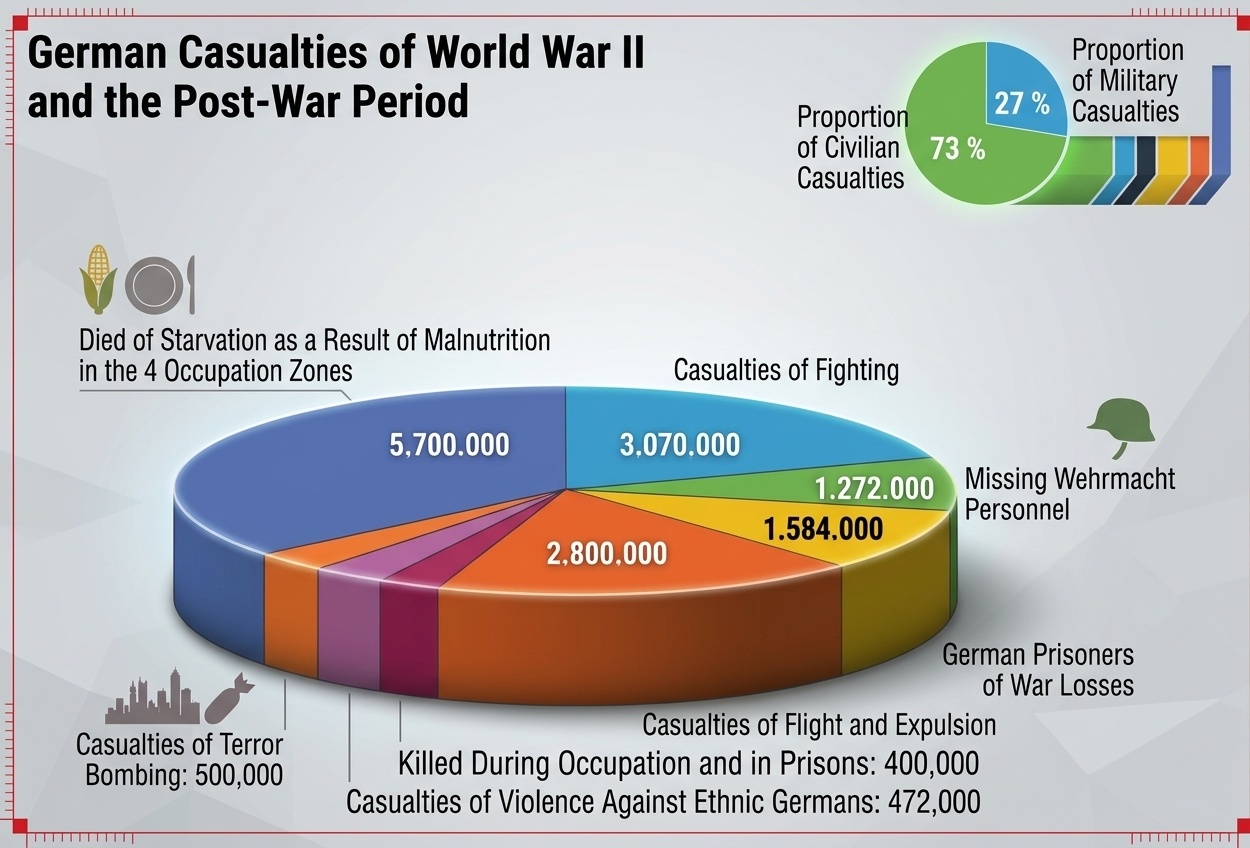
This means that roughly three quarters of the German victims were civilians — primarily the elderly, women and children, apart from prisoners of war.
According to the figures presented here, many victims died not during the fighting itself but after hostilities had ended: during expulsions, forced marches and transports, in captivity, from malnutrition or cold, or through violence under Allied occupation.
In total: 15.8 million dead, including 4.3 million soldiers and 11.5 million civilians.
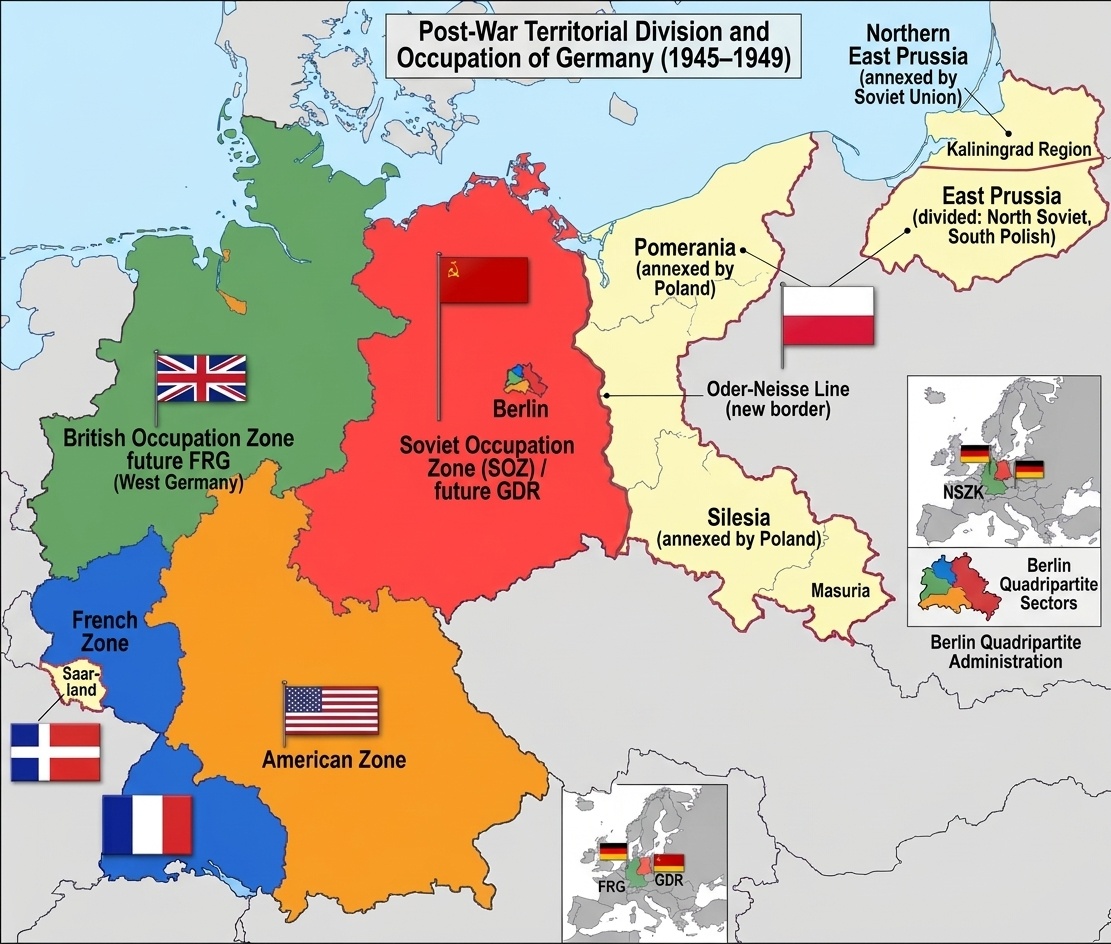
Germany also suffered major territorial losses. Historic German regions including East Prussia, West Prussia, Posen, Danzig, East Brandenburg, Pomerania and Silesia came under foreign administration or were transferred to other states. Nearly 11 million Germans were forcibly expelled from these areas. In addition, a further 2.5 million ethnic Germans were expelled or deported from countries in Eastern Europe.
The map below shows the post-war division of Germany, including the three Western occupation zones, the Soviet zone and the eastern territories transferred to Poland and the Soviet Union.
This website is based on Wolfhard Welzel’s 2008 book Ein deutsches Trauerspiel and was created with the kind permission of Grabert-Verlag, Tübingen.